


Nutrition Ingredients
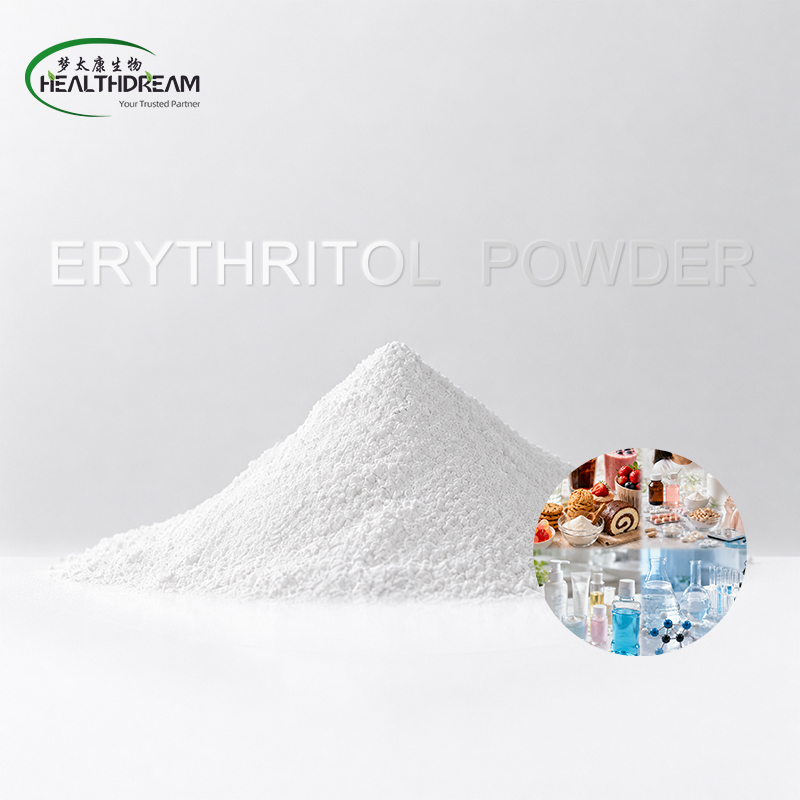
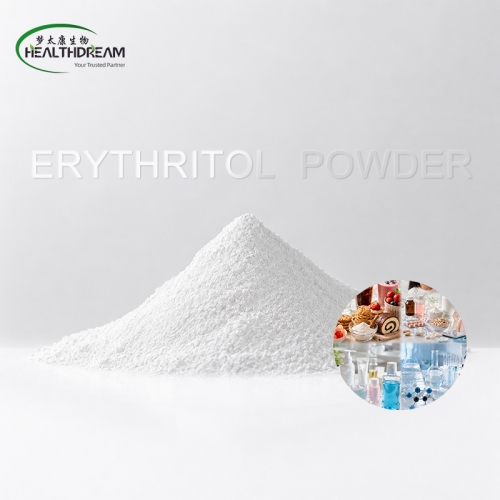
Erythritol Powder
Erythritol is a natural sweetener produced by microbial fermentation of corn or wheat starch. It is a white crystalline powder with about 70% of the sweetness of sucrose and low caloric value. Available in 99% purity, it can be used as a food ingredient i
Description

How does Erythritol provide sweetness without causing spikes in blood sugar or insulin levels?
The key to Erythritol providing sweetness without causing blood sugar or insulin spikes lies in its unique metabolic pathway. The human body lacks the enzymes necessary to break down erythritol. After ingestion, approximately 90% is absorbed directly into the bloodstream through the small intestine. However, it does not participate in glycolysis or insulin-regulated pathways. Instead, it is excreted unchanged from the body via the kidneys in the urine.
Because it provides no metabolizable carbohydrates, it has a Glycemic Index (GI) of zero and does not stimulate insulin secretion. Consequently, it has virtually no impact on postprandial blood sugar or insulin levels, making it an ideal sweetener for individuals managing their blood sugar levels and those seeking sugar-free alternatives.

| Item | Standard |
| Appearance | white crystalline powder |
| Assay(%) | 99.5-100.5 |
| Loss on drying(%) | <0.2 |
| Residue on ignition(%) | ≤0.1 |
| Heavy metal (Pb) | 0.0005 |
| Arsenic | ≤2.0ppm |
| Non soluble residues(mg/kg) | ≤15 |
| Pb | ≤1.0ppm |
| Glycerol +Ribitol (%) | ≤0.1 |
| Reducing Sugars(%) | ≤0.3 |
| Melting point | 119-123 |
| PH Value | 5.0 ~ 7.0 |
| Conductivity(μs/cm) | ≤20 |
| Storage | in the shade |
| Packing | 25kg/bag |

1.Zero-Calorie, Sugar Control & Metabolic Friendly: As a natural sweetener with "0 calories and 0 Glycemic Index (GI)," it is minimally metabolized by the human body. Over 90% is absorbed in the small intestine and excreted unchanged in the urine. It does not cause blood sugar fluctuations, making it an ideal sweetening source for individuals managing their blood sugar levels and those on weight management programs.
2.Oral Health & Dental Caries Prevention: Cariogenic bacteria in the mouth cannot utilize erythritol to produce acid. Furthermore, it exhibits inhibitory effects against oral pathogenic bacteria, effectively reducing plaque formation and significantly lowering the risk of dental caries.
3.Antioxidant & Cardiovascular Support: Research indicates that erythritol acts as an antioxidant that helps protect vascular endothelial function. While supporting healthy aging and skin condition, it also offers potential positive support for overall cardiovascular health.
4.High Tolerance & Gastrointestinal Comfort: Compared to other sugar alcohols like xylitol, erythritol has a smaller molecular size, allowing it to be easily absorbed in the small intestine with a very low proportion reaching the large intestine for fermentation. Consequently, it is less likely to cause gastrointestinal discomfort such as bloating or diarrhea, offering exceptionally high human tolerance.

1.Food & Beverages: As a natural zero-calorie sweetener, it is widely applied in sugar-free beverages, baked goods, chocolates, and confectionery. It provides a clean, refreshing sweetness and helps improve the overall texture and mouthfeel of the products.
2.Pharmaceuticals & Dietary Supplements: It is utilized as a flavor-masking agent for pediatric medications and as an excipient in tablets. Additionally, it serves as a sweetening source for special dietary foods formulated for individuals managing their blood sugar levels and those on weight management programs.
3.Cosmetics & Oral Care: Benefiting from its low hygroscopicity and excellent dispersibility, it is used in skincare products to provide moisturizing and emollient benefits. In oral care, it is incorporated into toothpastes and mouthwashes to help prevent dental caries and support a healthy oral environment.
4.Fine Chemicals & Pharmaceutical Formulations: It serves as a raw material for producing monomers of biodegradable materials. Furthermore, due to its high compatibility, it is utilized as a carrier or excipient in novel pharmaceutical formulations, such as inhalers.

Q1: Is Erythritol an artificially synthesized sweetener?
A: No, it is not artificially synthesized. Erythritol is a naturally occurring sugar alcohol found widely in fruits such as grapes, watermelons, and pears, as well as in fermented foods like wine and soy sauce. In industrial production, it is typically derived from natural glucose (such as corn starch) through yeast fermentation, followed by purification and crystallization.
Q2: Does consuming Erythritol cause blood sugar spikes?
A: No. After ingestion, the vast majority of erythritol is absorbed in the small intestine and excreted unchanged in the urine, with virtually no participation in the body's glucose metabolism. Therefore, it has a Glycemic Index (GI) close to zero and does not cause fluctuations in blood sugar or insulin levels, making it highly suitable for individuals managing their blood sugar levels and those on weight management programs.
