


Nutrition Ingredients
Fumaric acid
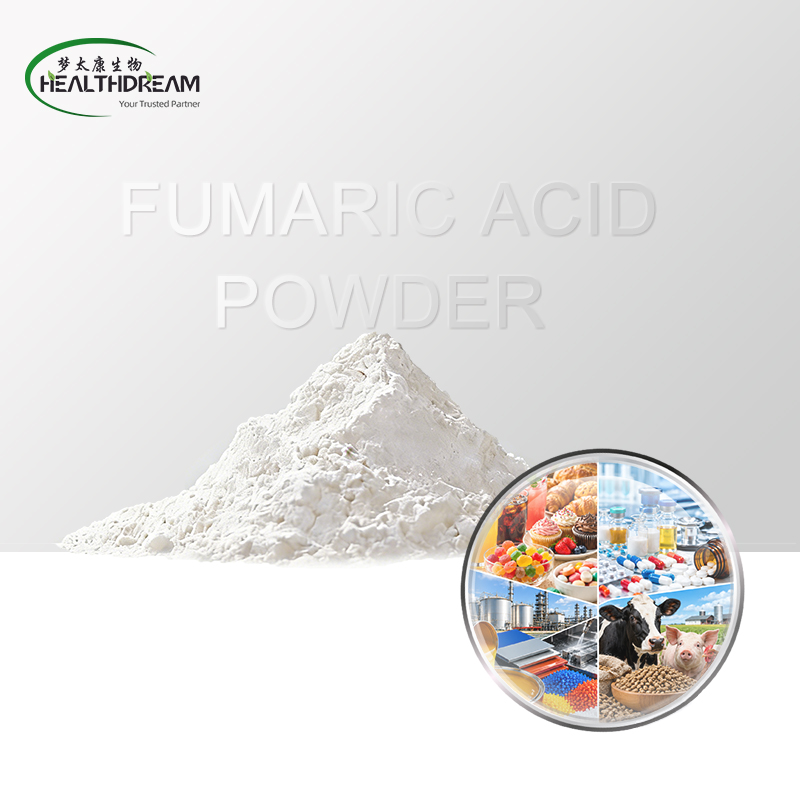
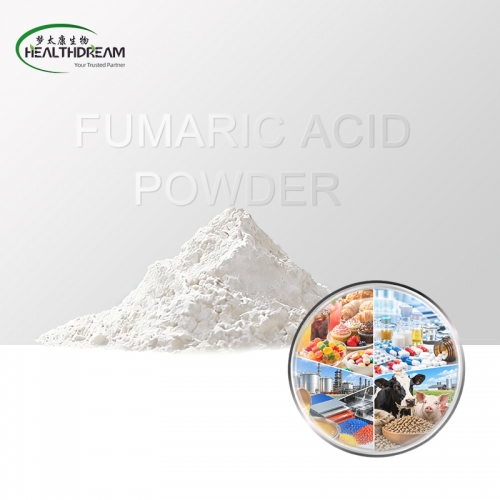
Fumaric acid is a naturally occurring organic acid widely used as an acidity regulator and antioxidant adjuvant. It appears as a white crystalline powder, soluble in water, suitable for beverages, jellies, baked goods and feed additives.
Description

Why is Fumaric Acid considered an optimal alternative to Citric Acid in food and pharmaceutical applications?
Fumaric Acid offers distinct advantages as an acidulant and preservative. With an acidifying strength approximately 1.5 times that of citric acid, it requires lower dosages to achieve the same level of acidity, thereby helping to optimize formulation costs. Additionally, it exhibits extremely low hygroscopicity, ensuring excellent stability and preventing caking in humid environments or dry powder blends. Furthermore, Fumaric Acid is highly effective at reducing pH levels, which contributes to superior antimicrobial and preservative properties, making it an ideal and highly efficient alternative to citric acid

| Testing Item | Standard |
| Description | White or nearly white crystalline granules. |
| Melting Point | 286.0-302.0 °C |
| PH | 3.0-3.2 (0.05% solution at 25℃) |
| Content | 99.5-100.5% |
| Maleic Acid | NMT 0.1% |
| Lose on drying/Moisture | NMT 0.5 % |
| Arsenic | NMT 3 ppm |
| Lead | NMT 2 ppm |
| Mercury | <2.0 |

1.Food Industry: As a highly effective acidulant and preservative, it is widely used in beverages, confectionery, and baked goods to enhance the sour flavor profile and help extend shelf life.
2.Pharmaceuticals & Healthcare: It is utilized as a salt-forming excipient in pharmaceuticals (e.g., ferrous fumarate) to help support drug absorption. It also serves as a key intermediate in the synthesis of various pharmaceutical raw materials.
3.Chemicals & Materials: It is an essential raw material for the production of unsaturated polyester resins, alkyd resins, and electrodeposition coatings. Additionally, it is applied in the pickling treatment of metal surfaces.
4.Agriculture & Animal Feed: Used as a feed acidifier, it helps regulate the pH balance in the animal gastrointestinal tract, thereby supporting nutrient digestion and absorption to help optimize feed utilization.

Q1: What is Fumaric Acid, and what is its relationship with malic acid?
A: Fumaric Acid, also known as trans-butenedioic acid, is an unsaturated dicarboxylic acid. In human physiological metabolism, it serves as a precursor to L-malic acid in the tricarboxylic acid cycle (Krebs cycle) and is also a byproduct of the human urea cycle.
Q2: What is the primary role of Fumaric Acid in the food industry?
A: In the food industry, Fumaric Acid is primarily used as an acidity regulator and acidulant. With an acidifying strength approximately 1.5 times that of citric acid and low hygroscopicity, it is commonly used in beverages, confectionery, jellies, and baked goods. It provides a clean sour taste, helps support food stability, and acts as a leavening agent in baking by reacting with bicarbonates to release gas.
Q3: What are the applications of Fumaric Acid in the pharmaceutical field?
A: In pharmaceuticals, Fumaric Acid is frequently utilized as an excipient (such as a pH adjuster and effervescent agent) to help support drug stability and solubility. Furthermore, it is an important pharmaceutical intermediate used in the synthesis of medications, including iron supplements like ferrous fumarate, as well as detoxifying agents like succimer (dimercaptosuccinic acid).
Q4: What are the uses of Fumaric Acid in the chemical and materials industries?
A: Fumaric Acid is a vital base material in the chemical sector, widely used in the synthesis of unsaturated polyester resins, alkyd resins, and plasticizers. These resins exhibit excellent resistance to chemical corrosion and heat, making them ideal for manufacturing fiberglass reinforced plastics, coatings, adhesives, and metal surface treatment agents.
Q5: What is the solubility profile of Fumaric Acid?
A: At room temperature, Fumaric Acid is slightly soluble in cold water (with a solubility of approximately 0.63 g/100 mL at 25°C). However, it is readily soluble in hot water and polar solvents like ethanol, while being practically insoluble in organic solvents such as chloroform and benzene.
