


Probiotics Powder
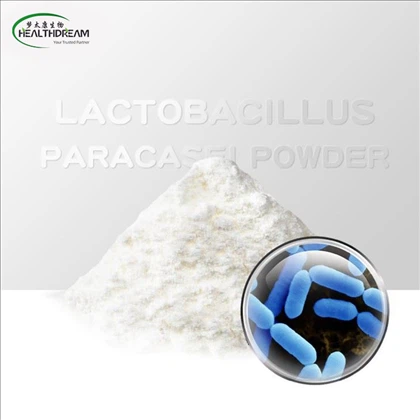
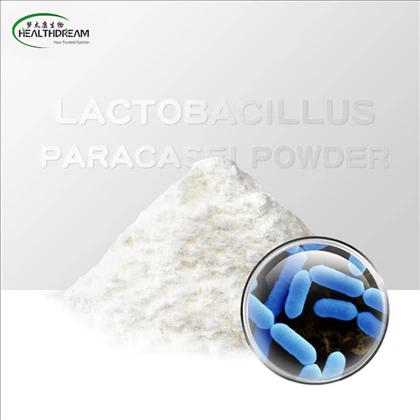






Lactobacillus Paracasei powder
Lactobacillus paracasei is a natural probiotic residing in the human intestinal tract, well-known for its outstanding acid and bile salt tolerance as well as immunomodulatory properties. It helps alleviate allergies, improve intestinal health, boost immun
Description


What is Lactobacillus paracasei?
Lactobacillus paracasei is a Gram-positive probiotic naturally found in the human intestines, oral cavity and fermented dairy products, belonging to the Lactobacillus genus. It is renowned for excellent acid and bile salt tolerance as well as strong intestinal colonization ability. It can pass through the gastrointestinal tract alive and adhere to intestinal epithelial cells.
As a multi-functional probiotic, Lactobacillus paracasei is backed by abundant clinical evidence in regulating gut microbiota, enhancing immune function, relieving allergies, improving diarrhea and maintaining oral health. It is widely applied in probiotic supplements, fermented dairy products and functional foods.

| Product Name: | Lactobacillus paracasei Powder |
| Strain name: | Lactobacillus paracasei |
| Strain identification: | Characteristic by API 50CH&16S rDNA |
| Type: | Freeze dried powder |
| Packing: | 1kg/bag, 5kg/bag in cold-chain package |
| Storage: | Package sealed at 4℃ or refrigeration - 18℃ |
| Shelf life: | 24 months from date of production |
| Certfication: | NSF, HACCP, ISO9001, Kosher, HALAL |
| Documents support: | Genetic identification report |
| IDA deposit certificate | |
| Certificate of analysis | |
| Stability study report | |
| Anti-bile salt & Anti gastro-acid study report | |
| Antibiotic sensitivity test certificate | |
| Safety study report | |
| Microbial Enumeration method |

| Descrption: | Fine powder, no caking, no abnormal odor, no visible foreign bod |
| Color: | White to light yellow |
| Mositure: | NMT 5.0% |
| Water activity: | < 0.12% |
| Viable cell count: | NLT 400 billion cfu/gram |
| Non LAB count: | < 5000 cfu/g |
| Yeast &mould: | NMT 50 cfu/g |
| Coliform: | < 10 cfu/g |
| Pathogenic bacteria: | Negative |
| Lead(Pb): | NMT 0.5 mg/kg |
| Arsenic(As): | NMT 0.5 mg/kg |
| Cadmium(Cd): | NMT 1.0 mg/kg |
| Mercury(Hg): | NMT 0.1 mg/kg |

1. Excellent Acid and Bile Salt ToleranceLactobacillus paracasei tolerates gastric acid (pH 2.5–3.0) and 0.3% bile salts, maintaining high survival rates in simulated gastrointestinal fluids and passing through the digestive tract as viable bacteria. In vitro tests of strain KW3110 show strong survival in gastric juice. It remained detectable in 50% of subjects one week after supplementation ceased, verifying reliable intestinal colonization.
2. Strong Intestinal Adhesion and Colonization CapacityIt adheres efficiently to intestinal epithelial cells via surface proteins, enabling temporary residence in the gut. Strain KW3110 exhibits significantly stronger adhesion to Caco-2 and HT29 cells than conventional Lactobacillus paracasei strains, and can remain detectable in 50% of participants for up to one week post-supplementation.
3. Highly Diversified Strain-Specific BenefitsDifferent strains deliver distinct targeted effects: N1115 (gut development in cesarean infants), CASEI 431 (immunity & respiratory health), KW3110 (anti-allergy), LPB27 (infant eczema), NTU 101 (cholesterol management), F19 (immunity for weaning infants). Strain selection should align with intended health benefits.
4. Outstanding Freeze-Drying StabilityLactobacillus paracasei powder produced via freeze-drying and microencapsulation retains stable viability for 2 years when stored at room or frozen temperatures. It is suitable for capsules, tablets, powders, drops, infant formula, fermented dairy products, solid beverages, animal feed and various other formulations.

1. Regulate Intestinal Microbiota and Improve Digestive HealthRandomized, double-blind, placebo-controlled trials of Lactobacillus paracasei N1115 confirm that this strain promotes intestinal development and microbial maturation in cesarean-born infants, improves digestive function, reduces abdominal pain, and alleviates symptoms of irritable bowel syndrome and inflammatory bowel disease.
2. Enhance Immune Function and Shorten Respiratory Infection DurationIn randomized double-blind placebo-controlled studies among healthy adults, strain CASEI 431 (also known as Lactobacillus paracasei 431) supplemented at ≥10⁹ CFU daily for 42 days significantly shortened upper respiratory symptom duration from 7.3 days to 6.4 days (P=0.0059), with more pronounced effects in the later intervention period.
3. Alleviate Allergies and Regulate Immune BalanceStrain KW3110 possesses strong anti-allergic activity, and exhibits high gastric acid tolerance and strong adhesion to intestinal epithelial cells in in vitro and oral trials. Strain LPB27 is in Phase II clinical trials (NCT06584552) for infant eczema, evaluating symptom improvement after 12 weeks of daily 10 billion CFU supplementation. Animal experiments verify that Lactobacillus paracasei reduces serum specific IgE production, lowers Th2 cytokines such as IL-4, and suppresses pulmonary inflammatory responses.
4. Prevent Respiratory and Gastrointestinal InfectionsRandomized controlled trials in weaning infants with strain F19 show that daily supplementation of 1×10⁸ CFU maintains high fecal Lactobacillus counts, modulates fecal short-chain fatty acid profiles, enhances specific vaccine responses, and reduces days of antibiotic prescription.
5. Anti-Inflammatory and Antioxidant EffectsStrain BHP06 inhibits mast cell degranulation (inhibition rate 59.86%), reduces reactive oxygen species and histamine levels, and suppresses mRNA expression of pro-inflammatory factors including TNF-α, IL-1β and IL-6 in macrophages.
6. Support Renal Protection and Chronic Disease ManagementResearch published in Cell Metabolism by Tongji Hospital demonstrates that Lactobacillus paracasei alleviates acute kidney injury and chronic renal fibrosis induced by ischemia-reperfusion in animal models. Clinical trials in chronic kidney disease patients also indicate potential to slow renal function decline.
7. Lower Cholesterol and Protect Cardiovascular HealthNumerous studies confirm the cholesterol-lowering capacity of Lactobacillus paracasei. Strain NTU 101 shows prominent hypocholesterolemic effects in multiple probiotic efficacy assessments, while strain 431 improves body weight, glucose-lipid metabolism and inflammatory oxidative stress markers in people at high risk of metabolic syndrome.
8. Promote Oral HealthLactobacillus paracasei inhibits the growth of cariogenic bacteria such as Streptococcus mutans and reduces dental plaque formation, making it suitable for functional oral health foods and oral care products.

Q1: What are the most well-known strains of Lactobacillus paracasei?
A: N1115 (gut development in cesarean-born infants), CASEI 431 (immunity & respiratory health), KW3110 (anti-allergy & intestinal colonization), LPB27 (infant eczema, Phase II clinical trial ongoing), NTU 101 (cholesterol regulation & high safety profile), F19 (immunity for weaning infants). Choose strains according to your intended applications.
Q2: Is Lactobacillus paracasei beneficial for respiratory infections?
A: Yes. RCT data of strain CASEI 431 show that daily intake of ≥10⁹ CFU for 42 days reduces upper respiratory symptom duration from 7.3 days to 6.4 days.
Q3: Can Lactobacillus paracasei relieve allergies and eczema?
A: Yes. KW3110 features strong anti-allergic effects and reduces specific IgE and Th2 cytokines. LPB27 is undergoing Phase II clinical trials for infant eczema (NCT06584552), evaluating efficacy after 12 weeks of daily 10 billion CFU supplementation. F19 lowers cumulative eczema incidence in infants, elevates IFN-γ/IL4 mRNA ratio and balances Th1/Th2 immune response.
Q4: Is Lactobacillus paracasei good for cesarean-born babies?
A: Yes. RCTs of N1115 confirm it accelerates intestinal development and microbial maturation in cesarean infants, helping them establish gut microbiota similar to naturally delivered babies.
