


Nutrition Ingredients
Magnesium phosphate
Magnesium phosphate is an inorganic compound that is soluble in dilute inorganic acids but almost insoluble in water. Magnesium phosphate has a wide range of applications, including as a nutritional supplement, anticoagulant, precipitant, and dental abras
Description

What is magnesium phosphate?
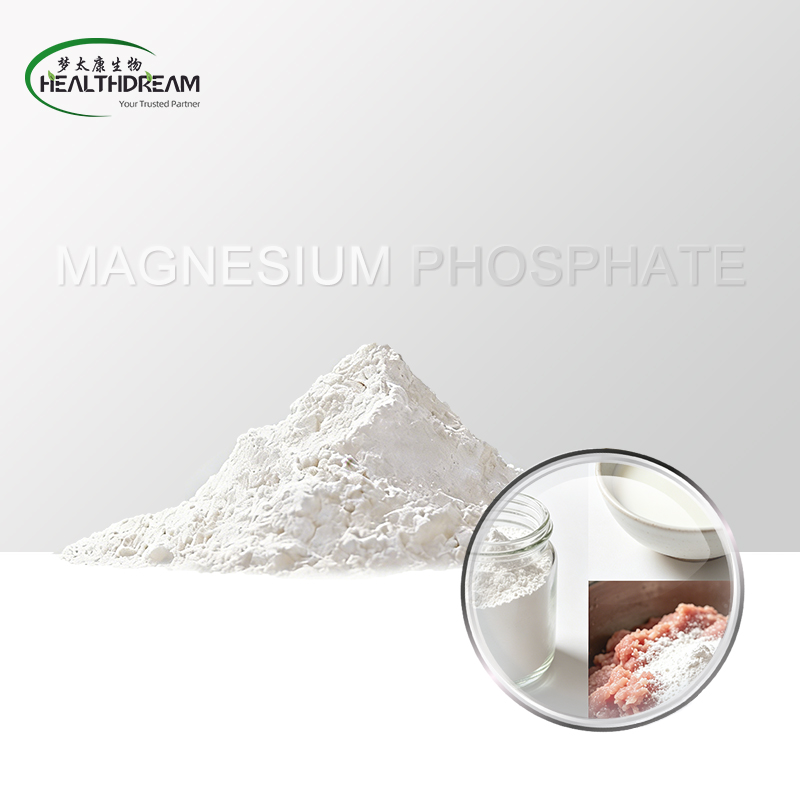
Magnesium phosphate, which can be divided into three types, contains 4, 5, or 8 molecules of bound water. It is a white, odorless, and tasteless crystalline powder that is soluble in dilute inorganic acids and almost insoluble in water. As a nutritional supplement, stabilizer, and pH regulator in the food industry; Used as a precipitant and dental abrasive in other industries.

| Product name: | Magnesium phosphate |
| Synonyms: | Trimagnesium bis(orthophosphate) |
| Molecular Formula: | Mg3(PO4)2 |
| CAS No: | 7757-87-1 |
| Appearance: | White powder |
| Specifications: | Assay> 98.0% |
| Package: | 25kg/drum |
| Storage: | This product should be stored in a dry and ventilated warehouse, can not be placed in the open; During transportation, attention should be paid to prevent rain and moisture, and the loading and unloading in direct sunlight should be carried lightly to prevent packaging damage. |
| Shelf life: | 2 years from date of production |
| Product classification: | Mineral supplements |
| Main uses: | Nutrient enrichment |

| Product name: | Magnesium Phosphate |
| Synonyms: | Trimagnesium bis(orthophosphate) |
| Molecular Formula: | Mg3(PO4)2 |
| Molecular Weight: | 262.86 |
| EC Number: | 231-824-0 |
| Items | Specification |
| Mg3(PO4)2 %: | 98.0~101.5 |
| As /%: | NMT 0.0003 |
| Fluoride%: | NMT 0.001 |
| Heavy metals (Pb): | NMT 0.0015 |
| Pb %: | NMT 0.0002 |
| Loss on ignition%: | 30-37 |

Agriculture: Magnesium phosphate can be used as magnesium fertilizer in agriculture to supplement soil magnesium. Magnesium is a key component of chlorophyll and is crucial for photosynthesis and growth and development in plants. Therefore, magnesium phosphate serves as
Magnesium fertilizer can improve crop yield and quality. Applying an appropriate amount of magnesium phosphate or magnesium sulfate per acre can improve soil magnesium nutrition and promote healthy crop growth.
Chemical industry: Magnesium phosphate can be used as a precipitant, corrosion inhibitor, and emulsifier in cleaning agents. Its unique permeability and emulsifying properties make it an ideal detergent for removing dirt from hard and metal surfaces. Meanwhile, magnesium phosphate can also react with calcium and magnesium salts in hard water to produce insoluble calcium and magnesium phosphate salts, which are non stick and do not adhere to fabrics, making them suitable for use in detergent formulations.
Food industry: Magnesium phosphate can be used as a nutritional supplement and anticoagulant in food. It is rich in magnesium, which can supplement the magnesium nutrients needed by the human body. Meanwhile, magnesium phosphate can also prevent food from clumping during storage and transportation, keeping the food in a loose state.

1.Ultra-low impurity
2.High bioavailability
3.Good stability
4.Support customization
5.Complement of elements
6.Selected mineral source
7.Monitor product quality
8.No arsenic or lead
9.Compound nutrition scheme

Q1: What is magnesium phosphate?
A: Magnesium phosphate is an important inorganic compound with excellent physical and chemical properties. It has a wide range of applications in many fields, including construction, environmental protection, chemical engineering, and food.
Q2: What specific products is magnesium phosphate used for?
A: Magnesium phosphate is used as an additive in coatings, plastics, and rubber products to improve the coverage, glossiness, and weather resistance of the products. In addition, it can also be used to prepare waterproof coatings, wear-resistant flooring, and other building materials. In the food industry, magnesium phosphate is commonly used to enhance the nutritional value of food, maintain its stability and taste.
Q3: What are the environmental characteristics and applications of magnesium phosphate?
A: As an effective precipitant, magnesium phosphate can help remove impurities and pollutants from water, thereby improving water quality. During the water treatment process, magnesium phosphate can combine with heavy metal ions, organic compounds, and other pollutants in water to form precipitates, which are then removed from the water through filtration, precipitation, and other methods.
