

Vitamin Products
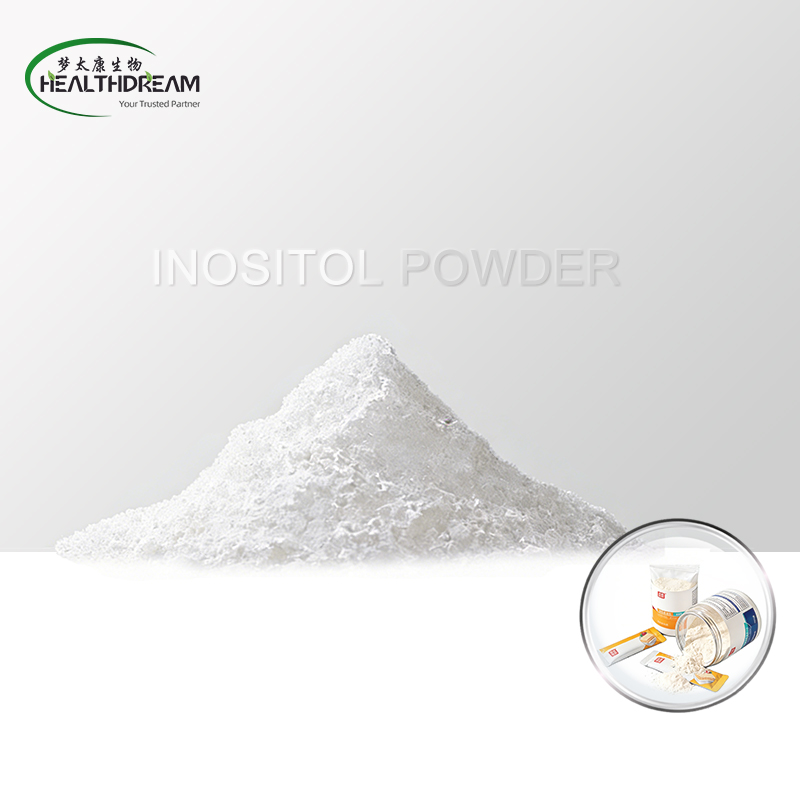
What is Inositol Powder?
Inositol Powder is a water-soluble, naturally occurring compound classified as a pseudo vitamin (similar to B vitamins). Found in grains, nuts, fruits, and animal tissues, it plays vital roles in human physiology: regulating cell signaling, supporting rep
Description

What is Inositol Powder?
Inositol Powder is a water-soluble, naturally occurring compound classified as a pseudo vitamin (similar to B vitamins). Found in grains, nuts, fruits, and animal tissues, it plays vital roles in human physiology:
regulating cell signaling, supporting reproductive health, aiding lipid metabolism, and maintaining healthy blood sugar levels. As a versatile supplement ingredient, it is widely used in dietary supplements,
functional foods, and nutraceuticals.

| Product name: | Inositol Powder 99% |
| Synonyms: | Cyclohexane-1,2,3,4,5,6-hexol |
| Molecular formula: | C6H12O6 |
| Molecular weight: | 180.16 |
| CAS NO: | 6917-35-7 |
| Packing: | 25kg per drurn |
| Storage: | Keep container unopened at cool place from heat and light |
| Shelf life: | 24 months from date of production |
| Origin: | China |
| Certificate: | ISO22000/ISO9001/USDA Organic/EU Organic/FSSC 22000 |
| Statement | Non GMO/No Allergens/ETO free Non irradiation;Non artificial preservatives, flavors or colors. |
| Production process: | Raw Material Selection (Corn Germ/Rice Bran) → Cleaning & Impurity Removal → Crushing & Size Reduction → Water Extraction (Controlled Temperature/Potency) → Filtration (Remove Insoluble Residues) → Concentration (Vacuum Evaporation) → Ion Exchange Purification → Crystallization → Centrifugal Separation → Spray Drying → Crushing & Sieving (Uniform Particle Size) → Quality Inspection (Purity/Heavy Metals/Microbes) → Finished Product Packaging |
| Test Item | Standard |
| Product name: | Inositol Powder 99%,USP42-NF37 |
| Description: | Fine, white crystals or as white crystalline powder. Odorless, with a sweet taste; stable in air. Its solutions are neutral to litmus. It is optically inactive. |
| Identification (A,B, C, D): |
Positive reaction |
| Melting point: | 224.0℃ ~ 227.0℃ |
| Loss on drying: | NMT 0.50% |
| Residue on Ignition: | NMT 0.10% |
| Assay: | 97.0% ~ 101.% |
| Chloride: | NMT 0.005% |
| Sulfate: | NMT 0.006% |
| Calcium: | Meet the requriement |
| Lead:: | NMT 1.0 mg/kg |
| Total arsenic: | NMT 1.0 mg/kg |
| Total plate count: | NMT 1,000 cfu/g |
| Mould and yeast: | NMT 100 cfu/g |
|
Negative |
| Salmonella: | Negative |
| Staphylococcus aureus: | Negative |

Dietary Supplements: Supports reproductive health, regulates blood sugar levels, and aids lipid metabolism, widely formulated in capsules, tablets, and powder supplements.
Functional Foods & Beverages: Added to energy drinks, protein shakes, cereals, and yogurt to enhance nutritional value, targeting wellness-focused consumers.
Nutraceuticals: Used in products for women’s health (e.g., PCOS support) and metabolic health, leveraging its role in cell signaling and hormone balance.
Cosmeceuticals: Incorporated into skincare and haircare products to promote hair growth, improve skin hydration, and strengthen nail health.
Feed Additives: Applied in animal feed (poultry, livestock, aquaculture) to boost growth performance, reproductive efficiency, and overall animal health.

Stable Raw Material Supply: Establishes 8 self-owned phytin production bases via long-term strategic cooperation, with raw materials directly extracted from corn steep liquor for eco-friendliness
and consistent quality.
Advanced Patented Technology: Adopts resin adsorption and multi-stage charge membrane separation processes, boasting independent invention patents to ensure product purity over 99% .
Large-Scale Production Capacity: Annual inositol output reaches 4,000 tons, holding over 50% of domestic market share and ranking among global leading manufacturers .
Comprehensive International Certifications: Certified by ISO9001, ISO14001, ISO22000, GMP, BRC, Halal, and Kosher, meeting strict quality standards for food, nutraceutical, and feed industries .

Q1:Who can benefit most from inositol supplementation?
A2: Key groups include women with PCOS, individuals with blood sugar imbalances, those seeking to improve hair/skin/nail health, athletes, and people with lipid metabolism concerns.
Q2: How does inositol differ from choline?
A2: Both support cell health, but inositol focuses on metabolism and hormone regulation, while choline is critical for brain function and liver health. They often work synergistically but
have distinct physiological roles.
Q3:What production process ensures high-purity inositol?
A3:Advanced processes like resin adsorption, ion exchange, and membrane separation are used to purify inositol, achieving purity over 99%. Reputable manufacturers also implement strict quality control.